

then create a magic square using the first nine even numbers ( 2 up to 18 inclusive)
how is this easy after making one with the odd numbers?

 magic square using the first nine odd numbers
using the first nine even numbers
what happens when you half these?
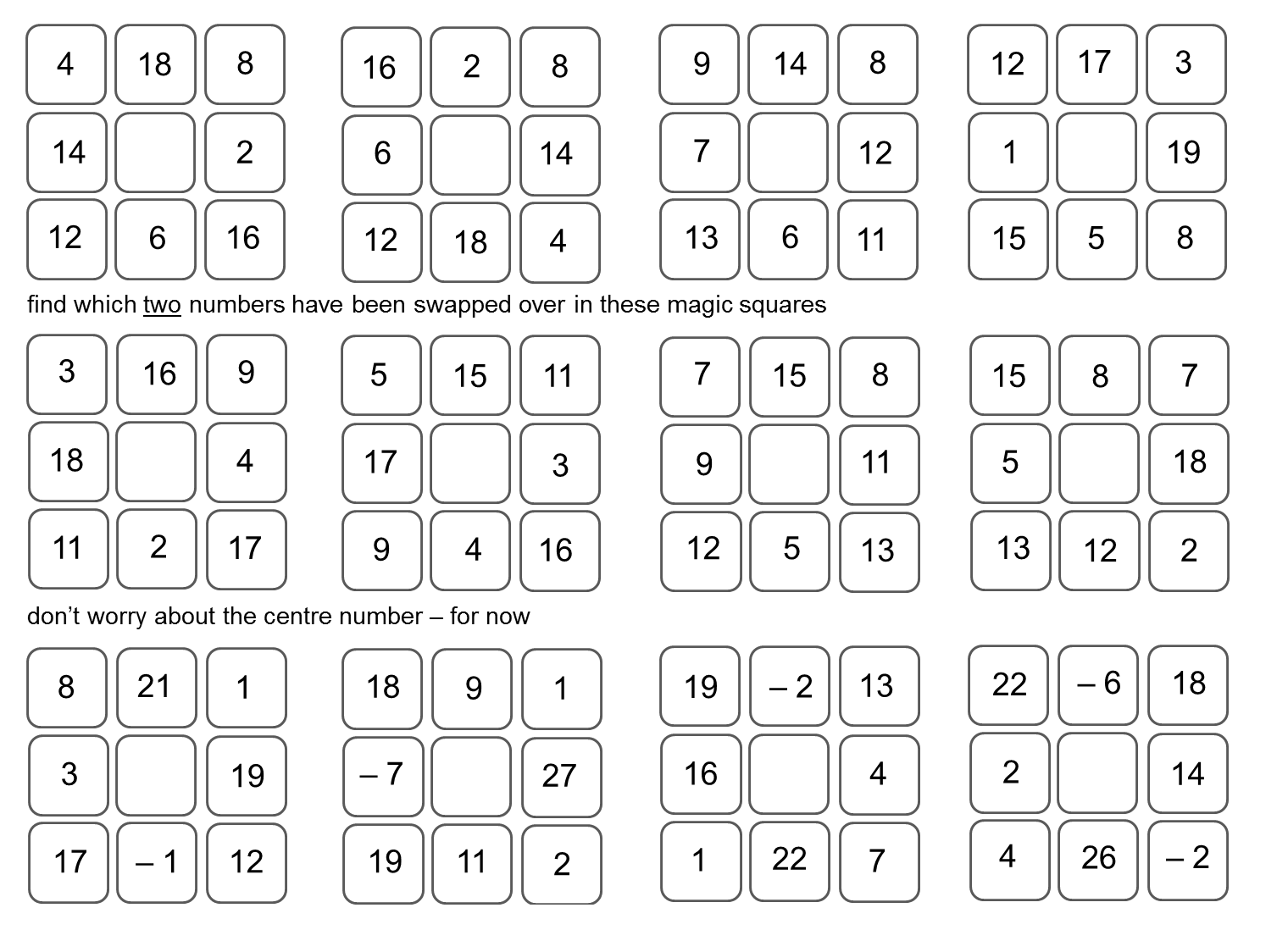
without bothering about the middle number, students try to 'unswap' these magic squares

then they look at their squares, sort out what the central number will be and find patterns (there are many)
then they can try to create a different magic square (not a refection or rotation of these) with 10 in the middle:


what happens if a = 2b?
how can you avoid involving negative numbers?
No comments:
Post a Comment
Note: only a member of this blog may post a comment.